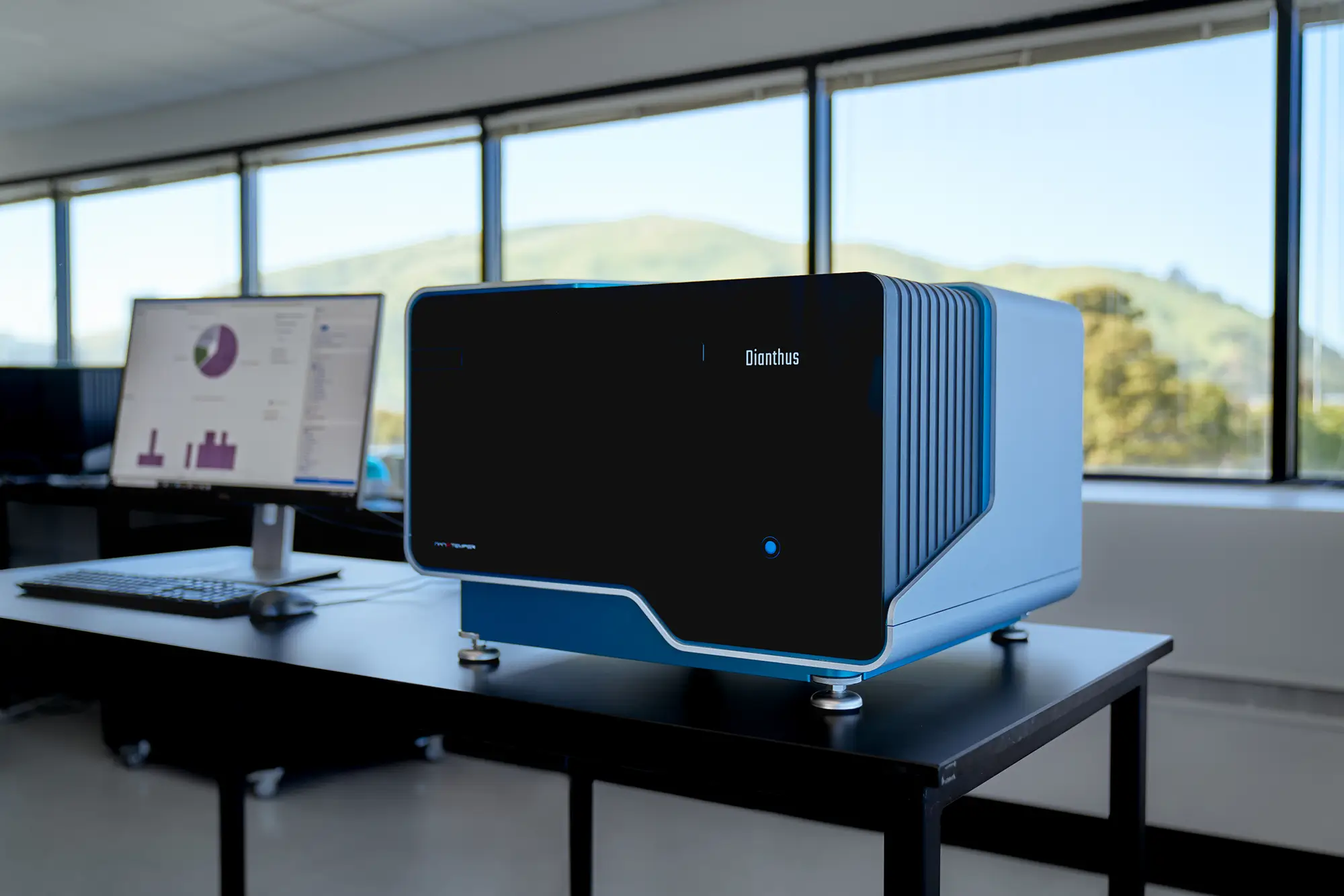
Characterization of binary and ternary complexes for TPD and induced proximity.
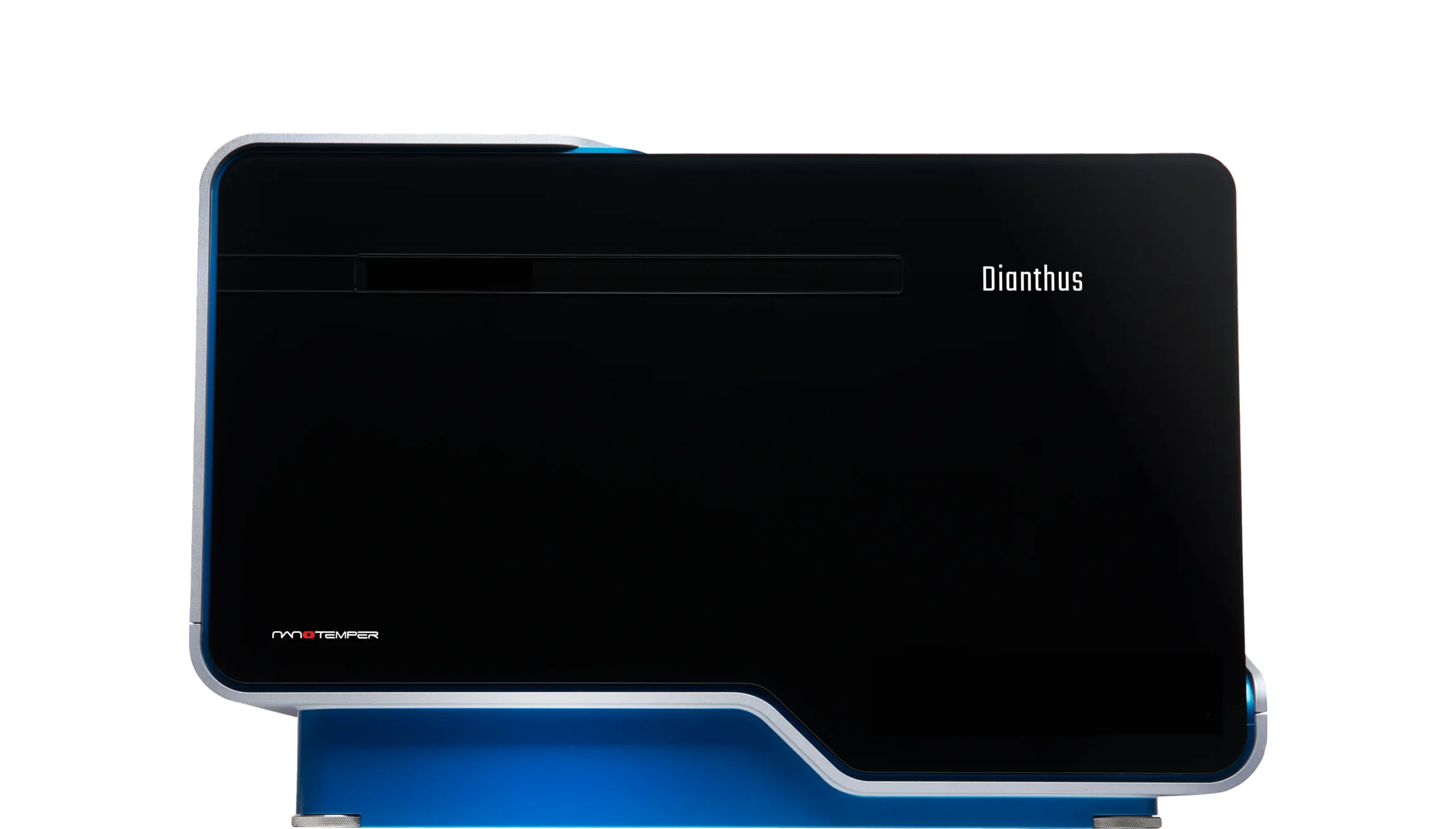
Developing induced proximity therapeutics demands a method that can reliably characterize both binary and ternary complexes, without the limitations of SPR, FRET, or AlphaScreen. Dianthus delivers mass-independent, in-solution affinity measurements with minimal assay development, so you can focus on finding the best degraders faster.
Dianthus measures binary and ternary complex interactions in solution, giving you accurate affinity data across every stage of degrader development.
From fragment screening to ternary complex cooperativity, Dianthus handles the full range of induced proximity characterization challenges. Spectral Shift technology measures interactions in solution under equilibrium conditions, making it mass-independent and ideal for small molecules like warheads and E3 ligase ligands. Unlike SPR, there’s no immobilization to compromise complex stability, and unlike AlphaScreen or TR-FRET, assay setup requires just one fluorophore and no beads, dramatically reducing protocol complexity. Covalent ligands are also no problem, since each interaction is measured independently, in solution, and without the need for chip regeneration.
Dianthus overcomes the key roadblocks in binary and ternary complex characterization.
Standard biophysical methods struggle with the complexity of PROTAC and other degrader systems; immobilization artifacts, mass-dependent detection, and lengthy assay development all slow progress. Dianthus is purpose-built to handle these challenges, giving you reliable data at every step.
Characterizing binary and ternary complexes requires just two steps and a single fluorophore to label your POI or E3 ligase. No beads, no complex optimization, and far less sample consumed compared to SPR or FRET-based methods.
Dianthus measures binding affinities of binary and ternary complexes to enable straightforward calculation of cooperativity (α) and identification of the hook effect. These are critical parameters for confirming efficient ternary complex formation.
Identify hits from fragment libraries with confidence and track affinity improvements as fragments are grown into warhead molecules. Dianthus handles the broad affinity range involved, from weak fragment hits to tight lead candidates, without switching methods.
One platform, three complementary technologies for complete PROTAC characterization.
Spectral Shift
Detects binding by measuring the shift in fluorescence emission spectrum of a labeled molecule upon interaction with its binding partner or partners, enabling mass-independent, in-solution affinity measurements across a wide range of affinities.
Temperature related intensity change (TRIC)
Measures changes in fluorescence intensity in response to a temperature change, providing an orthogonal readout of molecular interactions that complements Spectral Shift data and increases confidence in your affinity determinations.
Optical Unfolding
Monitors the unfolding of your labeled protein as temperature increases, delivering stability data alongside binding data to give you a more complete picture of how your components behave under assay conditions.
If your degrader could talk, it would ask for a Dianthus.
Our match to affinity measurement.
“NanoTemper helps us turn challenging biophysical tasks into routine workflows. Their intuitive solutions give us reliable data faster, so our teams can focus on advancing drug candidates.”
Join the Newsletter